Teaching
Lab demonstrating at Imperial, how I teach, the summaries I have made public, and how to reach me about tutoring.
From 2026 onwards, I’m seeking any teaching opportunities in London or elsewhere.
I learn best by teaching. That is not a slogan about generosity: explaining something is the only reliable way I have found to see how deeply I understand it, the so-called Feynman technique. So I teach a fair amount, and the summaries below exist because writing them was how I learned the material in the first place.
The way I teach follows from the same thing. I start from the premise rather than the procedure, because a student who can only reproduce a method is stuck the moment the problem is phrased differently. That takes longer at the start and is much faster afterwards. I would happily talk for hours about fundamental physics, machine learning, quantum computing, first principles, psychology, neuroscience, philosophy, music, or films.
As of 2026, I’m going all in on my research projects at Imperial: research is what I do there, full-time, and it takes nearly all of my week. The one teaching duty I hold is in the Physics Department’s undergraduate laboratories. From October 2026, I demonstrate in the Year 2 undergraduate physics labs at Imperial, on the thermal and electrical waves experiment: supervising students at the bench, checking their setups and their reasoning, and marking their lab work. It is my first formal teaching role at Imperial, and I may add more, for physics classes, from 2027 onwards; I will list it here as it comes. Beyond that, this page holds the summaries I have made public, and tutoring.
On language. I teach in English, which is my preference for teaching, though I can also teach in Korean or, with some limitations, even in French where the circumstances call for it. Obviously, everything here, my summaries included, is written in English, just like every other part of this website. I welcome any opportunities for teaching: reach out!
I have also given talks many times in schools, at science museums and at expos, alongside the broadcast work collected under Media & Outreach. I welcome those opportunities too.
Study materials
My handwritten summaries from the Master’s in Physics at Imperial (2024–2025), one folder per module, released under the MIT Licence in imperial-physics-notes. Corrections by issue or pull request are welcome.
Affiliations

Advanced Quantum Field Theory
227 pages
- Functional methods and the generating functional
- Renormalisation and the renormalisation group
- Non-abelian gauge theories, Faddeev–Popov ghosts
- Spontaneous symmetry breaking and the Higgs mechanism
- Anomalies
Quantum Field Theory
138 pages
- Canonical quantisation of scalar, spinor and vector fields
- The S-matrix, Wick's theorem, Feynman rules
- Tree-level cross sections and decay rates
- Loop corrections and regularisation
Advanced Particle Physics
94 pages
- Electroweak unification and precision tests
- QCD, asymptotic freedom, parton distributions
- Flavour physics and CP violation
- Neutrino masses and oscillations
- Beyond the Standard Model: the Higgs sector and dark matter
Alongside those sits my computational physics mini-project, a finite-difference time-domain solver for the time-dependent Schrödinger equation written in Mathematica, with animations of wave-packet dispersion, reflection and tunnelling across four potentials. This was five weeks of work rather than a full research project, and it was awarded the highest grade by Dr Jaroslaw Pasternak in 2025.
The three modules above were run by Prof. Andrew Tolley (Advanced Quantum Field Theory), Prof. Toby Wiseman (Quantum Field Theory) and Dr Michael McCann (Advanced Particle Physics). Incidentally, Dr McCann is also part of the Imperial High Energy Physics group, my own group, and works on flavour physics and b-quark decays on LHCb at CERN.
Three further modules now have folders of their own, without the summary cards above: General Relativity (98 pages), taken with Prof. Claudia de Rham; Advanced Classical Physics (99 pages), again with Prof. Andrew Tolley; and Mathematical Methods for Physicists (107 pages), with Prof. Fay Dowker.
I know all of these subjects mentioned here well, inside out, so I can supply study materials for any of them, and I’m able to teach all of them. The advanced subjects I can teach, and supply materials for:
- Quantum Field Theory
- Particle Physics
- Quantum Mechanics
- Quantum Information
- General Relativity
- Cosmology
- Electrodynamics
- Fluid Mechanics
- Mathematical Methods for Physicists
- Computational Physics
- Machine Learning
Each subject above links to the MIT OpenCourseWare syllabus for the nearest equivalent course, as a neutral reference for the level and scope I mean.
One thing the repository deliberately does not contain: lecture notes, slides, problem sheets or past papers produced by Imperial or anyone else. Those belong to their authors and are not mine to redistribute. Everything published there is my own handwriting and my own code.
Tutoring
For tutoring specifically: private or in groups, online or in person in London. Undergraduate and Master’s students who study physics and mathematics are the natural fit (quantum mechanics, quantum field theory, particle physics, general relativity, mathematical methods), along with scientific Python and machine learning for people coming to it from a physics background.
The foundational subjects I tutor:
- GCSE Physics
- A-level Physics
- A-level Mathematics
- Algebra
- Geometry
- Calculus
- Linear Algebra
- Engineering Mathematics
- Classical Mechanics
- Special Relativity
GCSE and A-level have no MIT counterpart, so those are left unlinked. The material I teach follows the UK specifications and the Imperial modules above, not MIT’s.
On format, level and everything else I’m flexible. For opportunities, reach out!


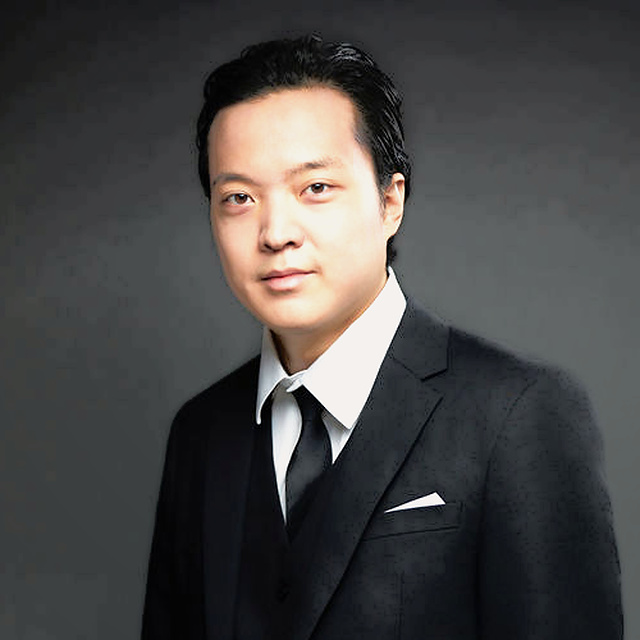
Neutrino Physics @ Imperial College London, DUNE & NOvA Collab || Machine Learning || Quantum Computing || Quant Researcher || Multidisciplinary Scientist || Physics × ML × QC × Quant || 🇬🇧 London-based (2023–Present)
Imperial College London | Imperial College London
View profile