Research
Multiple tracks, one method: inference under uncertainty.
Written in English throughout, deliberately: research is a global conversation, and my collaborators and readers are principally in the UK and the USA.
My research has moved across general relativity & cosmology, high-energy astrophysics, particle physics, machine learning, quantitative finance and quantum computing. That looks like a scattered CV until you notice that every one of those problems is the same problem: you have noisy, incomplete data generated by a physical process you only partly understand, and you need a calibrated statement about what is true. Everything below is a variation on that.
Neutrinos and beyond-Standard-Model (BSM) physics
Affiliations




Where I am now. I work on the Deep Underground Neutrino Experiment (DUNE) at Imperial College London, supervised by Dr Linda Cremonesi in the Imperial DUNE group. DUNE will measure charge–parity (CP) violation in the lepton sector, determine the neutrino mass ordering, and search for physics beyond the Standard Model, but only if the systematic uncertainties can be controlled to a degree no long-baseline experiment has achieved before. See more.
And the experiment with data today. Alongside DUNE I work on NOvA (NuMI Off-axis \(\nu_e\) Appearance), which has been running since 2014: two functionally identical detectors 810 km apart, both 14.6 mrad off the NuMI beam axis so the flux narrows around 2 GeV, near the \(\nu_\mu \rightarrow \nu_e\) oscillation maximum. My role on NOvA is a variety of physics analysis. Dr Cremonesi is its spokesperson, and the group runs both as a single programme. The practical consequence is that methods get tested against real, systematics-limited data before they are asked to carry a DUNE measurement. See more.
The specific thrust. Systematics-aware machine learning reconstruction in liquid argon time projection chambers (TPCs), combined with Bayesian and MCMC (Markov chain Monte Carlo) inference, and the propagation of Near-Detector constraints to the Far Detector. The Near Detector is not merely a control measurement. Rather, it is the constraint engine: it fixes the flux and cross-section nuisance parameters that would otherwise dominate the oscillation fit. Getting that propagation right, with uncertainty that is calibrated rather than merely small, is the interesting part.
A position I hold. Machine learning should augment qualitative physical interpretation by humans, never replace it entirely. A reconstruction network that improves resolution while making its own failure modes unauditable is a worse instrument than a slower method you can reason about. Physics-aware and systematics-aware, not black-box. This way machine learning can be the best tool that humans can ever utilise.
Earlier BSM work. Higgs-portal dark matter and invisible-decay constraints via the vector-boson-fusion signature, with High-Luminosity LHC (HL-LHC) projections, a study at Imperial under Prof. Alexander Tapper. The exclusion reach in that channel is governed by control of the \(Z \to \nu\nu\) and \(W \to \ell\nu\) backgrounds rather than by luminosity: systematics, not statistics. That is the same story as precision oscillation physics, and it is a large part of why I moved towards systematics-aware methods. See more.
Machine learning for physics and medical applications
Affiliations
AtriPINN. Physics-informed neural networks (PINNs) for real-time atrial fibrillation mapping from grid electrograms, built in PyTorch with Prof David Colling and Dr Nick Linton, on clinical data from Hammersmith Hospital. The architecture combines local plane-fit conduction velocity, time-shifted kNN blending, and PINN residuals enforcing wave, eikonal and monodomain (Aliev–Panfilov) dynamics. On sinus-rhythm data it reaches ~1.6 mm RMS localisation error, ~78 ms end-to-end latency, and ≥0.99 channel cross-correlation; coordinate-agnostic, with switchable physics back-ends. A comparative study against conventional numerical modelling is in preparation for IEEE Transactions on Biomedical Engineering (Song et al. 2026a).
The data. Two catheter geometries, each recorded in both normal sinus rhythm (NSR) and atrial fibrillation: the 4×4 Advisor HD Grid and the 6×6 OPTRELL. We work mainly from the OPTRELL recordings.
Where I sit in this. My contribution is technical and methodological throughout: the modelling, the numerics, the underlying physics, and the machine learning and software engineering that turn it into working code. The clinical expertise belongs to my collaborators, and I make no claim to it. What draws me to the problem is its structure as an inference problem rather than its being a medical one.
Why this matters beyond cardiology. The interesting result is not the error bar; it is that imposing the governing equation as a soft constraint buys you data efficiency and physical plausibility simultaneously. That is directly transferable to detector reconstruction, where labelled data is expensive and unphysical predictions are worse than imprecise ones. See more.
Quantum computing for computational fluid dynamics (CFD)
Affiliations

A part-time collaboration with Singularity Quantum, working with their CFD engineers.
Where this one started. Around 2007 and 2008 I became obsessed with quantum information and quantum computing, and the interest never went away: it has run underneath everything I have done in academia since, which is a large part of why this collaboration appealed to me.
The company is building quantum-enhanced biomechanical modelling for precision treatment decisions. The flagship application is CT-FFR: fractional flow reserve (FFR) derived from a CT scan. FFR is the pressure ratio a cardiologist uses to decide whether a coronary stenosis warrants intervention, from a CT scan rather than from a catheter. Done well, a simulation replaces an invasive procedure.
What I work on. Augmenting and enhancing the classical CFD model that the quantum work is built around, and the hybrid layer that surrounds the quantum kernel. I work principally with Dr Victoria Rolandi, on their CFD side. My contribution here is technical and methodological throughout: fluid-dynamics modelling, numerics, the underlying physics, and ML engineering. As above, the clinical side is not mine and I make no claim to it; what interests me is the modelling problem, not the medicine per se. See more.
Why the classical layer is where the risk lives. The accuracy of a CT-FFR pipeline is not dominated by solver speed. It is dominated by three things sitting around the solver: the segmentation of the coronary tree from the CT, which is resolution-limited in vessels a couple of millimetres across; the outlet boundary conditions, where an entire downstream vasculature you cannot observe is compressed into a lumped-parameter or Windkessel model; and the rheological choices - Newtonian or shear-thinning blood, rigid or compliant walls. Get those wrong and a solver a thousand times faster converges beautifully to the wrong number, sooner.
That is the same structure as everything else on this page: a governing equation you trust, an observation operator you do not, and a requirement to produce a number someone will act on. Physics-informed methods suit it well, because they let unknown boundary conditions and material parameters be learned while the partial differential equation (PDE) is still enforced.
Where the quantum side is genuinely well-chosen. The usual objection to quantum linear solvers is readout: the solution ends up encoded in amplitudes, and extracting all \(N\) components costs \(O(N)\) measurements, which destroys the speedup. You only win when the quantity you want is a scalar functional of the solution. FFR is precisely that: a single pressure ratio, with the clinical decision effectively a threshold at 0.80. That makes cardiovascular CT-FFR a much better-posed target than a generic “quantum for CFD” story.
What transfers, and what does not. My fluid-dynamics background is general-relativistic magnetohydrodynamics (GRMHD): conservative finite-volume schemes on curvilinear grids, approximate Riemann solvers, Courant–Friedrichs–Lewy (CFL) conditions, primitive-to-conserved inversion, grid-convergence studies. The numerical craft carries over directly, and curvilinear coordinates are second nature after general relativity, where there is no Cartesian escape hatch. What does not carry over is pressure–velocity coupling: relativistic magnetohydrodynamics is compressible and hyperbolic, so there is no incompressibility constraint and no pressure–Poisson equation, and for incompressible coronary flow that is the central difficulty. That gap is the part I am actively closing.
Quantitative research
From October 2025 to August 2026 I ran an independent quantitative research practice, focused on futures, derivatives and equities. The organising question was alpha generation under non-stationary dynamics: how do you detect a regime shift without overfitting to the last one?
The toolkit was the one I already had: stochastic control (HJB), Monte Carlo methods, time-series modelling, Bayesian inference, and physics-inspired signal/noise separation. The discipline is the one physics teaches: take structural constraints seriously. Market impact, inventory, liquidity and latency are not frictions to be assumed away; they are the boundary conditions, and a strategy that ignores them is a strategy that has not been specified. See more.
I hold a Securities Education Certificate (Distinction) and completed the Finance Accelerator in London; I am a member of Imperial’s Algorithmic Trading and Investment societies.
Earlier work: relativity, cosmology, black holes
Black hole magnetospheres. Applying pulsar outer-gap theory to Kerr black holes, I showed that a lepton accelerator arises near the event horizon as a consequence of frame dragging, and that the resulting gamma-ray flux is beamed along the rotation axis and enhanced by more than an order of magnitude as spin increases from \(a = 0.90M\) to \(a = 0.9999M\), with concrete implications for Fermi-LAT and CTA detectability (MNRAS Letters 471, L135). Extending the same framework to a stellar-mass black hole moving through a dense gas cloud gave a detectable very-high-energy signature for an extremally rotating hole within roughly 1 kpc (ApJ 867, 120). See more.
Blandford–Znajek energy extraction. With Dr Isao Okamoto (NAOJ), a reformulation of electromagnetic energy extraction from rotating black holes in terms of the frame-dragged force-free magnetosphere, split at the null surface (arXiv:1904.11978 and 2401.12684).
Sagittarius A* variability. GRMHD simulations (BHAC) post-processed through general-relativistic radiative transfer (BHOSS), modelling multi-wavelength variability of the Galactic Centre black hole across magnetically arrested disc states and competing electron-heating prescriptions. This was high-performance computing work throughout: MPI-parallelised Fortran on clusters, a parameter survey of dozens of long runs, and radiative post-processing heavy enough to be a compute job in its own right. Carried out at UCL’s Mullard Space Science Laboratory (MSSL) with Dr Ziri Younsi and Prof Kinwah Wu; manuscript in preparation for MNRAS (Song et al. 2026b).
Early-universe cosmology. Raychaudhuri-type and shear-evolution equations for geodesic congruences in a Bianchi-I universe, and the imprint of anisotropic shear on primordial gravitational waves (arXiv:1604.07639).
For the full record, see publications and projects.
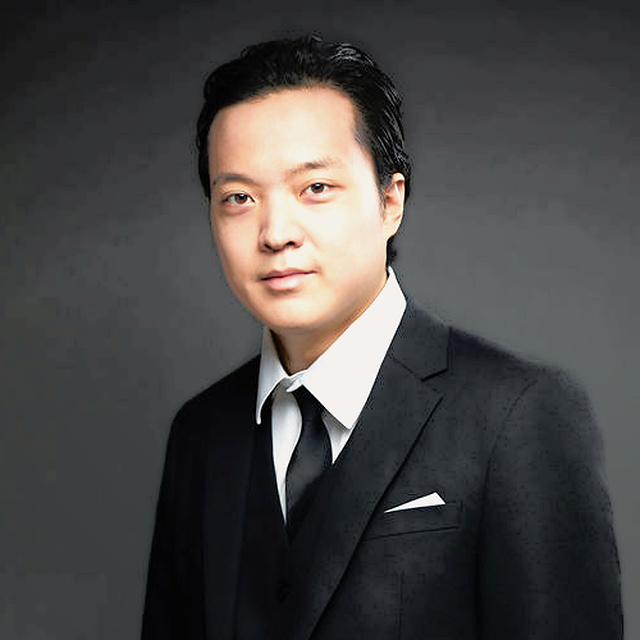
Neutrino Physics @ Imperial College London, DUNE & NOvA Collab || Machine Learning || Quantum Computing || Quant Researcher || Multidisciplinary Scientist || Physics × ML × QC × Quant || 🇬🇧 London-based (2023–Present)
Imperial College London | Imperial College London
View profile