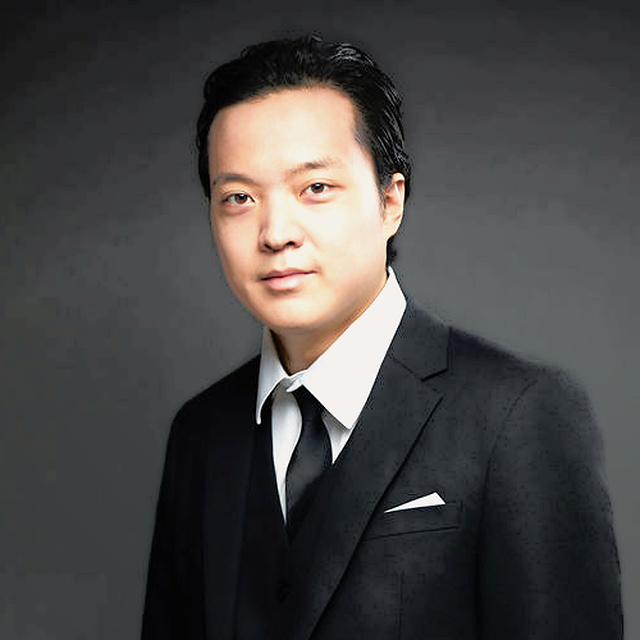
Eugene (Yoogeun) Song
PhD Researcher in Physics at Imperial College London · Neutrinos (DUNE · NOvA) · Machine Learning (ML) · Quantum Computing · Quantitative (Finance) Research · Computational Fluid Dynamics (CFD)

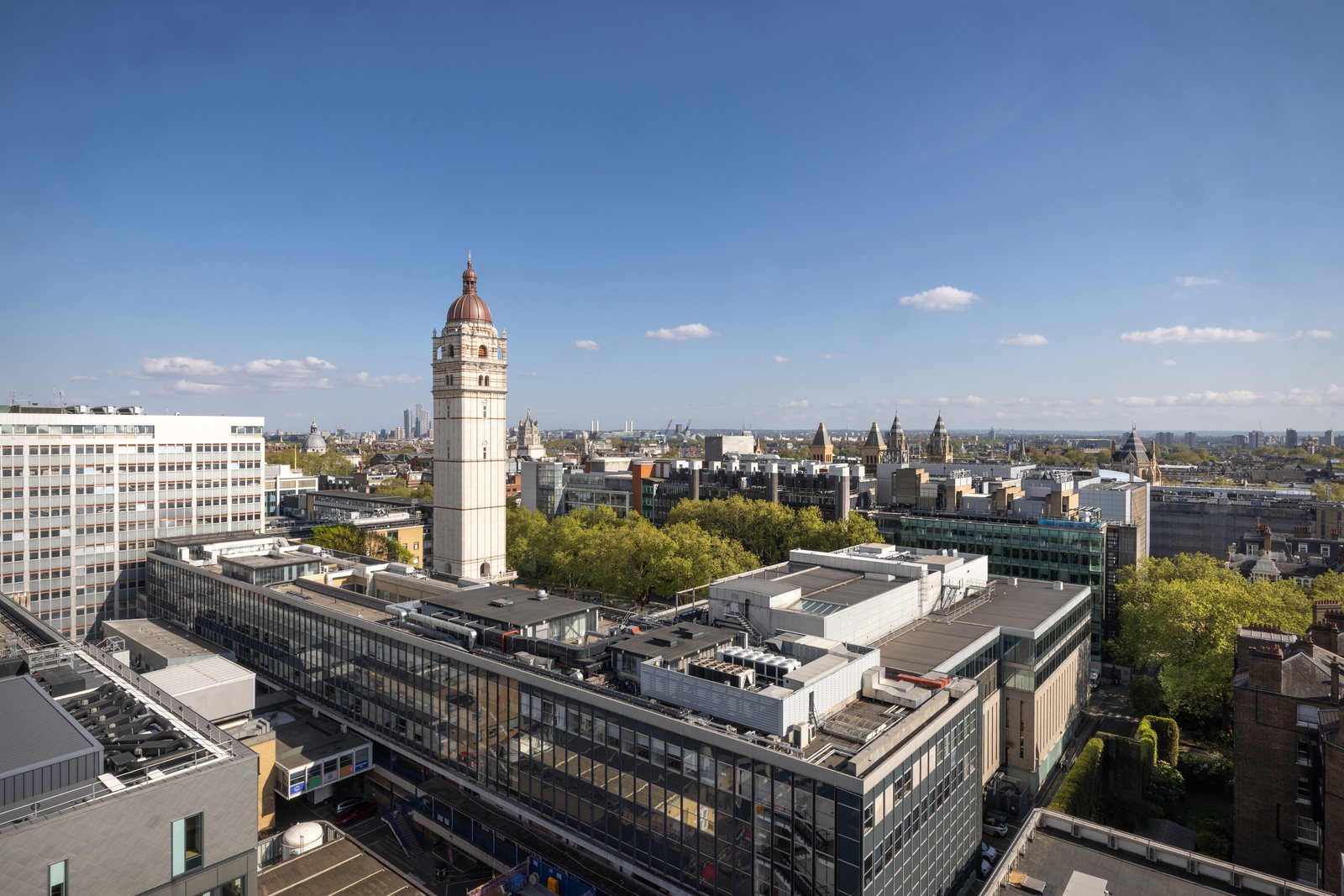
Imperial College London,
South Kensington, London SW7 2AZ, United Kingdom
I am a high-energy physicist at Imperial College London, working on neutrino physics with the Imperial Physics of Particles community (formerly known as the Imperial High Energy Physics group, IC HEP) on the DUNE (Deep Underground Neutrino Experiment) and NOvA (NuMI Off-axis \(\nu_e\) Appearance) collaborations, under Dr Linda Cremonesi. Both are Fermilab’s flagship American neutrino experiments; Fermilab is the United States’ national laboratory for particle physics, supported principally by the Department of Energy. On NOvA my role is a variety of physics analysis. My work sits at the point where physical modelling, machine learning and statistical inference stop being separate disciplines and start being one problem: inference under uncertainty.
Affiliations

That framing is also my history: I enrolled at university to study physics at age 7, finished the Bachelor’s degree at age 11, and published my first first-author paper in MNRAS Letters at age 19. Since then I have worked across general relativity and early-universe cosmology, black hole magnetospheres and Blandford–Znajek energy extraction, general-relativistic magnetohydrodynamic (GRMHD) modelling of Sgr A*, physics-informed neural networks for clinical electrophysiology, and, at present, neutrinos and beyond-Standard-Model physics (or “new” physics). The range looks scattered from the outside. From the inside it is one method applied to different data.
From early 2023 to mid 2024, I was a visiting researcher at UCL’s Mullard Space Science Laboratory, working on general-relativistic magnetohydrodynamic (GRMHD) modelling of Sgr A*.
From 2024 to 2025, at Imperial, I did projects on the Higgs boson as a portal to dark matter and AtriPINN. Alongside both I have been a member of Imperial’s Algorithmic Trading and Investment societies, which is where the independent quant practice came from. Imperial College London is ranked #2 globally in the QS World University Rankings for three years in a row, from 2024-25 to 2026-27.
In 2026, four things occupy me. First, the neutrino physics: a variety of physics analyses on NOvA, and systematics-aware machine learning (ML) reconstruction for the DUNE Near Detector (ND): the ND is not merely a control detector; it is the constraint engine that makes precision oscillation measurements possible. Second, AtriPINN: physics-informed neural networks that map atrial fibrillation from grid electrograms in real time, at ~78 ms end-to-end latency and ~1.6 mm RMS localisation error. Third, a part-time quantum computing collaboration with Singularity Quantum: quantum-accelerated computational fluid dynamics (CFD) for non-invasive cardiovascular diagnostics, where I work with their CFD engineers on augmenting and enhancing the CFD model, and on the hybrid layer around it: the physics-informed machinery that infers the boundary conditions and prepares what gets handed to the quantum kernel. In the second and third of these, my part is the technical and methodological one, and deliberately so: the governing equations, the numerics, the machine learning and the software engineering that turn a model into a working pipeline. The medicine belongs to my collaborators, and it is not what draws me; what draws me is that both are inverse problems with a physical law in the loop, which is the same thing that draws me to neutrinos. Fourth, quantitative research. From October 2025 to August 2026 I ran an independent practice on alpha under non-stationary market dynamics, treated as a physics problem in signal and noise rather than a curve-fitting exercise. That work is now folded back into the same question the rest of my research asks.
Among those four, the first two sit on the Imperial side; the third and fourth sit outside it. The first three run in parallel, day to day. The fourth takes very little of my time now, though it is still running at the back of my mind. As of autumn 2026, my name is officially on the Imperial HEP people page, listed with the rest of the 2026 PhD cohort. See more
I have been based in the London area in the UK since 2023, and before that I spent time in Spain and the Netherlands for various collaborations. For now I want to continue living in Europe and to make it home here. I care about building things that are reproducible, scalable, and principled, and I would rather re-examine a premise than optimise inside someone else’s. I always trust the process, and that habit carries directly into my research and all the other aspects of my life. If you are working on hard problems in neutrinos, in machine learning for physics, in quantum computing, or in markets, I would like to hear from you. Feel free to reach out!
Where to find me. For the most up-to-date: LinkedIn is where I am most active - 9,000+ followers - with Bluesky next; most of my followers on both are based in Europe or the USA. Location-wise, I am physically in London, UK (most of the year), or occasionally in the USA: LA, California or Chicago, Illinois; get in touch when you are in town!
A note on language. This website is in English throughout: I am based in Europe and work across the UK and the USA, and English is the one language that reaches people from all continents.
More about me
My name in Korean is 송유근, and my pronouns are he/him/his (cisgender male; straight). I was born in Seoul, Korea, on 27 November 1997. I hold citizenship of the Republic of Korea, and only that one, at least for now - this may change in the future.
From being celebrated in Korea as a prodigy for my academic achievements in my teens, to conducting cutting-edge research in Physics at Imperial College London, my journey presents a relentless drive to push the boundaries of science and technology, and to make an impact.
Early recognition positioned me to inspire others, and to highlight the importance of science education, or rather the absence of a complete system able to support the hyper-gifted children it identifies. Today, as a Physics graduate researcher at Imperial, I am leveraging my multidisciplinary expertise in particle physics and machine learning to drive impactful global scientific advancements. In 2026 I work at the intersection of physics, ML and bioengineering. Also, for my PhD at Imperial, I started working on neutrino oscillations and interactions this year (technically my second-ever PhD).
Outside physics I have built end-to-end quantitative research capability across futures, derivatives and equities: stochastic calculus and stochastic differential equation (SDE) modelling, alpha generation under non-stationary regimes, regime-shift detection that does not simply overfit the last regime, physics-inspired signal-and-noise separation, Bayesian inference and Monte Carlo for path-dependent problems, and the market-microstructure constraints (impact, inventory, liquidity, latency) that decide whether a signal survives contact with a book.
As you can see, I build long-horizon, robust, durable systems: reproducible, scalable, and principled. My strength is first-principles fluency across the physics (elementary particle physics, quantum field theory, general relativity, astrophysics, fluid dynamics, quantum information), the mathematics underneath it (differential geometry, topology, stochastic calculus), and the computational & applied side (deep learning, statistical modelling, alpha research, algorithmic trading).
I have been based in Europe (now in London, UK) since 2023, and I plan to continue living here for a while and make it home here. As of 2026, my current focus in on the academic research side, but I am also considering, and very open to the possibility of leading global STEM innovation in industry, where science evolves into real-world applications.
In 2026 I am working part-time with Singularity Quantum on CFD applications, and over the last few years I have met and talked with a great many founders and CEOs across robotics, machine learning, quantum computing, advanced biotechnology & neurotech, AI applications and quantitative finance: in London, in Paris, and in Seoul at ICML 2026. I also spend a good deal of time talking to, and befriended people from Imperial Business School and Dyson School of Design Engineering too. For instance, in the summer of 2025, I participated in a discussion with Lucy Jung (Imperial alum, founder at LYEONS) as part of the Imperial Neurotech society event; we also talked about possible future collaborations.
In fact most of my friends and connections in the UK are from Imperial society activities, business-related people, sports buddies, and language exchange buddies. My connections come from every sort of background, nationality, ethnicity and culture, which is a large part of why I love London so much, and all of them are welcome. I’m always open to collaborations with brilliant, like-minded people!
What follows is how I got here, chapter by chapter.
The early record: 2004–2009. In October 2005, at the age of 7, I set a national record in South Korea by enrolling in the Physics BSc programme at Inha University, with coursework commencing in February 2006. Soon after, I transitioned to a Computer Science programme at the National Institute for Lifelong Education (NILE). In 2009, at the age of 11, I earned my Bachelor’s through NILE’s Academic Credit Bank System, a record that remains unmatched. For the full record, see my CV.
Graduate work in Korea: 2009–2018. In 2009, I joined the integrative (Master’s + PhD) programme at the Korea University of Science and Technology (UST) and the Korea Astronomy and Space Science Institute (KASI). Whilst there I authored four papers in cosmology and high-energy astrophysics, two of them published in Monthly Notices of the Royal Astronomical Society and The Astrophysical Journal. I completed the PhD coursework there, finished with All-But-Dissertation status, and left UST in August 2018. During 2017–2018 I was invited by Dr Kouichi Hirotani as a visiting PhD student at the Academia Sinica Institute of Astronomy and Astrophysics in Taiwan, where I published two papers with him and Dr Satoki Matsushita: Song et al. (2017) and Hirotani et al. (2018). In 2018, for 4 months, I was invited by Dr Isao Okamoto as a visiting researcher at the National Astronomical Observatory of Japan to work on the modified Blandford–Znajek mechanism (arXiv:1904.11978), and I carried on collaborating with him until the end of 2022, before I moved to Europe. From that period there is also an SBS Special documentary about my journey.
National service: 2018–2020. From December 2018 to August 2020 I completed my mandatory national service in the Republic of Korea Army, as a driver and driving instructor with the 7th Engineer Brigade, VII Corps. I finished as a Sergeant. Being away from research and academic side, it mattered more than the dates suggest. Being responsible for other people’s safety in an environment where everything is checked, and checked time and time again, is where I learned responsibility and reliability as habits rather than intentions, and ultimately it is where the discipline behind everything since came from. Whilst there, I was good in every key area: that’s why I was awarded the “Special Grade Warrior” (특급전사) distinction by the brigade in 2020 for my outstanding performance across all key military competencies, including marksmanship, regular brigade training, tactical expertise, and weapon proficiency. My specialty in the army was driving various vehicles, maintaining and repairing them, and teaching driving to juniors. I was honored with the brigade’s “Exemplary Army Driver” (모범 운전병) distinction in 2020 in recognition of my outstanding performance in driving and teaching, and commitment to safety. I also represented my company in the brigade-level bodyweight fitness competition in 2020 - this is another thing started here - I was obssessed with physical fitness training: mid-distance running, calisthenics, weight-lifting and so on, which later became my strong passion. My honorable discharge was in August 2020 – 6 years ago (time really flies)! I was a civilian again then.
Independent research, and building a global network: 2020–2022. The worldwide pandemic happened earlier that year. After my honorable discharge in August 2020, through the pandemic, as a civilian I kept my research going remotely, working with Dr Isao Okamoto, in collaboration with the National Astronomical Observatory of Japan on modified Blandford–Znajek energy extraction from Kerr black holes. I also spent this pandemic period reaching out to researchers across the US, the UK and Europe - at Montana State, Purdue, Columbia, the Observatoire de Paris, UCL and elsewhere - which is how much of my later network began. Two other things started in this period and changed my direction: Being an avid language learner I went deep into European languages, adding Spanish and Italian to French and German, and decided that Europe was where I wanted to be; and I also began seriously exploring quantitative finance. For a few years back then I had been contemplating moving to the USA or Europe, initially for my career in academia or possibly industry. Voilà, Europe it is. And I never looked back ever since.
Moving to Europe, and working at UCL: 2022–2024. In 2022, I visited Europe - Spain, the Netherlands, and eventually the UK - collaborating with European researchers and attending in-person European conferences including the European Astronomical Society (EAS) and the Heidelberg International Symposium. I discussed with various researchers during this period in Europe, including Ciska Kemper, Frank M. Rieger, Oliver Porth, Benoît Cerutti, Ziri Younsi, and others. From 2023 I moved to the UK, and I was a visiting researcher at UCL’s Mullard Space Science Laboratory, working with Dr Ziri Younsi and Prof Kinwah Wu on the multi-wavelength variability of Sagittarius A*, coupling GRMHD simulations to general-relativistic radiative transfer. That is where large-scale computational physics stopped being something I read about and became a part of my arsenal. It is also where I started weighing up whether to stay in astrophysics at all, or move across to particle physics. The biggest topics going then were gravitational-wave physics (e.g., LIGO and LISA), ultra-high-energy astrophysics, quantum computing, and neutrino physics. I already had some experience of the first two; it was the latter two I wanted to work on, and that is the direction I took. Part of the reason was where astrophysics itself seemed to be heading: further towards observation and, to my eye, towards cataloguing, increasingly resembling “stamp collecting” in Ernest Rutherford’s phrase, with machine learning applied to ever larger surveys, and further from the theory and phenomenology I actually wanted to spend my time on. Voilà, particle physics it is: I decided to move across from astrophysics to neutrino physics for good. And I have never been happier for a decision.
Imperial, and three things at once: 2024–present. In 2024, I moved to Imperial College London for a Masters in Physics. The taught side ran through Advanced Quantum Field Theory (AQFT), Advanced Particle Physics (APP), Quantum Field Theory, General Relativity, Advanced Classical Physics, Mathematical Methods for Physicists, and Research Computing Skills for Physicists (Mathematica and MATLAB). Alongside those I completed a self-study project on the Higgs boson as a portal to dark matter with Prof. Alexander Tapper of the Imperial HEP group, graded A. I also built an interactive Mathematica simulator, Quantum Waves in Motion: numerical modelling of the time-dependent Schrödinger equation, with wave-packet visualisations and tunnelling, also graded A, assessed by Dr Jaroslaw Pasternak. My thesis, Physics-Informed Machine Learning for Real-Time Afib Mapping on Grid Electrograms, was supervised by Prof David Colling of the HEP group and Dr Nick Linton of Bioengineering, and was awarded the highest grade; I stayed on as a research assistant on that project for a further year. Since then the work has widened: AtriPINN with Hammersmith Hospital, and an independent quantitative research practice through 2025–26. In 2026, I also started my PhD - technically my second one - in neutrino physics with DUNE and NOvA under Dr Linda Cremonesi. I have also recently started working part-time with Singularity Quantum on quantum-enhanced CFD projects. Imperial has held #2 globally in the QS rankings for three years running, from 2024-25 to 2026-27.
The rest of this website. Research is most of it, but not all of it. The Teaching page holds the handwritten lecture summaries I have made public from the Imperial lectures (quantum field theory, particle physics, general relativity, classical physics and mathematical methods, among others), together with how I teach and how to reach me about tutoring. As of 2026 I am all in on research at Imperial, full-time, with only a few courses to audit alongside it; my one teaching duty so far is demonstrating in the Year 2 undergraduate physics labs (the thermal and electrical waves experiment), which started in October 2026, and anything further will be listed there as it comes. The Blog is where I write from inside whichever room (metaphorically speaking) I am in at the time. The Interests page is the rest of me: languages, sports, travel and networking across Europe, reading, music and film, chess and poker, and psychology and neuroscience. Media & Outreach collects two decades of press, documentaries and interviews, from Korea and Japan for the most part; from 2026 onwards I am focusing entirely on English-language outlets with a global audience, and I would especially like to work with the Natural History Museum, the Science Museum, the Institute of Physics and the Royal Astronomical Society here in London for outreach purposes. Which brings me to the one common thing all of those pages share: this website is entirely written in English, deliberately, because the audience I am writing for is global, principally in Europe and the USA, and English is the one language that reaches all of it. That will never change!
For the full record, see my CV.
Follow me on LinkedIn for the most recent updates on my journey! Multiple years in, my network looks like London itself: every background, nationality, ethnicity and culture in it. That is much of what I love about Europe. Come and join it!
Neutrino Physics @ Imperial College London, DUNE & NOvA Collab || Machine Learning || Quantum Computing || Quant Researcher || Multidisciplinary Scientist || Physics × ML × QC × Quant || 🇬🇧 London-based (2023–Present)
Imperial College London | Imperial College London
View profilenews
| Sep 30, 2026 | My name is now officially listed on the Imperial High Energy Physics group’s people page, as a PhD student working on DUNE and NOvA. I had been waiting for several months for it to appear online; finally! Listed alongside me in the 2026 Imperial HEP PhD cohort are Niamh Terranova, Ilinca Butu, Ryleigh Resendiz, Thomas Accattatis, Dhruv Naik, Anthony Quinlan, Thomas Lobmaier, Benjamin Wagner-Gammon, Raman Ahluwalia and Max Long. We are all connected on LinkedIn; in fact, I’ve been connected with most of the ICL HEP group’s members, students and staff alike, since 2024. See more |
|---|---|
| Aug 15, 2026 | Started a part-time role with US startup Singularity Quantum, working on quantum-enhanced computational fluid dynamics. ⚛️ |
| Jul 11, 2026 | Attended ICML 2026 and met up with Imperial College London folks halfway across the world: Dr Thomas Varsavsky (Physics alum, co-founder at Adexis) and Rose Cymbler (MSc Business Analytics, co-founder & CTO at Talia). Wonderful discussions all round! See more |
| Feb 01, 2026 | Starting my PhD - technically my second one - on DUNE and NOvA at Imperial College London this year, supervised by Dr Linda Cremonesi. 🎉 |
| Jan 27, 2026 | Travelled to Paris, France, to meet and interview quant finance professionals who came to the field from physics PhDs, several now at CFM and elsewhere, including Dr Léonard Lehoucq at CFM, and Dr Imen Al-Samarai, a good friend and a mentor. |
| Nov 14, 2025 | Attended the Royal Astronomical Society Early Career Researchers meeting, organised by former UCL colleague Dr Ruth Kelly, with a careers panel spanning academia, industry, teaching and public engagement. The highlight was finally meeting Dr Robert Massey, Deputy Executive Director of the RAS: back in 2018 he gave Korean broadcaster SBS a television interview explaining my first-author MNRAS Letters paper on enhanced gamma radiation from extremely rotating black holes, published when I was 19. See more |
selected publications
- In prep.Physics-Informed Neural Networks and Conventional Numerical Modelling for Real-Time Atrial Fibrillation Mapping from High-Density 6×6 Grid Electrograms: A Comparative StudyIEEE Transactions on Biomedical Engineering. Imperial College London, with clinical data from Hammersmith Hospital. , 2026Draft in preparation